
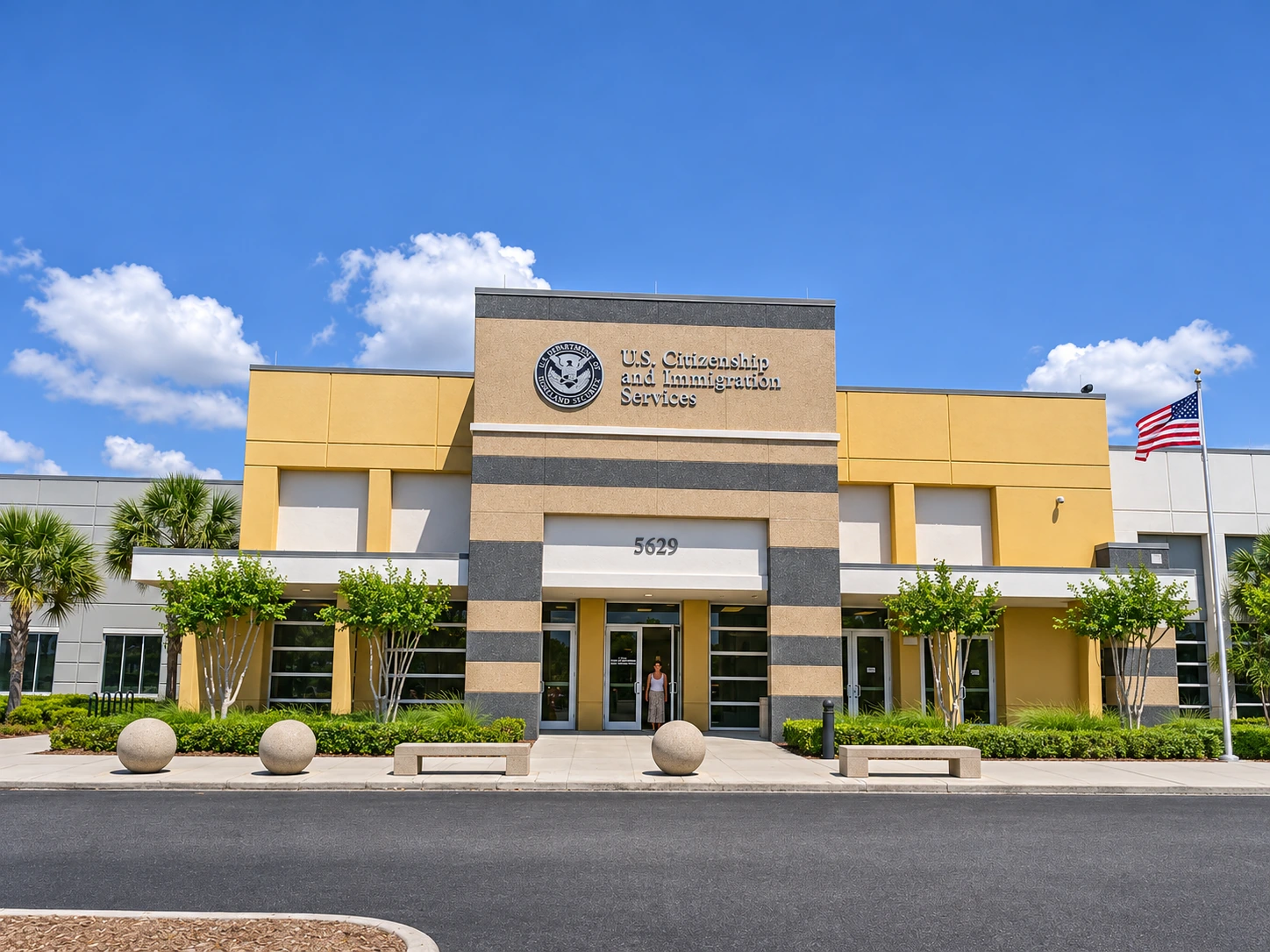
Preparing for a marriage-based green card interview in Tampa? Start with the application you filed and the notice USCIS sent. This guide explains the documents, relationship evidence, questions, and practical steps to review before your appointment.
On this page
- Where is the USCIS Tampa Field Office?
- What is USCIS reviewing at a marriage green card interview?
- Does my spouse need to attend?
- What should we bring to the interview?
- How do we update our marriage evidence?
- What questions might the officer ask?
- Can I bring an interpreter?
- Can an attorney attend the Tampa interview?
- What happens on interview day?
- What happens after the interview?
- What if something changes before the appointment?
- Get help preparing for a Tampa marriage interview
- Official USCIS resources
Where is the USCIS Tampa Field Office?
Tampa, FL 33634
USCIS Contact Center: 800-375-5283
Check the location printed on your interview notice before making travel arrangements. Your appointment may be assigned to a particular office based on your case and USCIS scheduling. A Tampa mailing address alone does not tell you where to attend.
The Tampa Asylum Office is a separate facility on Coconut Palm Drive. Marriage green card interviews scheduled at the Tampa Field Office take place at the address on the field-office notice. The firm’s client meeting office at 711 S Howard Ave is also a separate location.
Use the USCIS office locator and check office closings before you leave. Allow time for traffic, parking, and security, and follow the arrival instructions on your notice.
What is USCIS reviewing at a marriage green card interview?
The interview concerns your eligibility for permanent residence and the marriage underlying the case. A legally valid marriage and an approved I-130 do not, by themselves, resolve every requirement for adjustment of status.
The officer may review the relationship, identity and civil documents, the information in the I-485, and issues affecting eligibility or admissibility. Entries to the United States, previous immigration applications, employment history, prior marriages, and criminal records can matter. Your preparation should cover the record you actually filed.
USCIS decides whether to require or waive an interview. If you have received an appointment notice, prepare to attend unless USCIS changes that appointment. Read the agency’s adjustment-of-status overview for the general process.
Does my spouse need to attend?
For a marriage-based adjustment interview, plan for both the applicant and the petitioning spouse to attend, and read the notice for the specific instructions in your case. Do not assume an earlier I-130 approval means the spouse can stay home.
If your spouse cannot attend, you are separated, or circumstances have changed since filing, discuss the situation with an attorney before the appointment. The right response depends on the case. Do not simply skip the interview or assume that bringing a letter resolves the issue.
What should we bring to the interview?
Start with the checklist in your interview notice. USCIS instructs adjustment applicants to bring original documents corresponding to what was submitted, including passports, travel documents, and I-94 records even if expired. Keep an organized copy set that can be provided if requested.
| Document group | What to organize |
|---|---|
| Appointment and identity | Interview notice, government photo identification, passports, travel documents, and I-94 records. |
| Marriage and civil records | Marriage certificate, birth certificates, proof of the petitioning spouse’s citizenship or permanent residence, and records ending earlier marriages. |
| The filed case | Copies of the I-130, I-130A, I-485, I-864, relevant attachments, and USCIS notices or responses. |
| Life together since filing | Updated shared housing, finances, insurance, children’s records, travel, and selected photographs that reflect your actual circumstances. |
| Case-specific requests | Documents named in the notice, relevant certified court dispositions, updated sponsorship evidence, or medical evidence USCIS requests. |
This is an organizing framework, not a replacement for your notice or a determination that every listed item applies to you. Discuss missing originals, financial changes, or a requested medical examination before the interview. If a sealed medical envelope is required, do not open it yourself.
How do we update our marriage evidence?
Your initial filing shows the relationship at an earlier point in time. Review what has happened since then: a move, a new lease, shared insurance, joint financial activity, trips, or a child’s birth may give you additional records to organize.
USCIS identifies joint property, a shared lease, combined finances, children’s birth certificates, and statements from people who know the relationship among potential evidence of a bona fide marriage. See the I-130 instructions for the agency’s examples.
Choose a clear, representative set of documents and understand what each one shows. A large binder of repetitive material can be harder to use than a well-organized record. Photos can illustrate your relationship, but consider how the rest of the evidence documents your life together.
If you live apart for work or school, have limited joint accounts, or have another circumstance that needs explanation, tell the truth and discuss the available evidence with your attorney. Do not add names to old documents or create a history that did not happen.
What questions might the officer ask?
There is no guaranteed list of Tampa interview questions. These examples are topics to review honestly, not a script to memorize:
- How did you meet, and how did the relationship develop?
- When and where did you marry? Who attended?
- Where do you live, and how do you manage household expenses?
- What work or school schedules shape your daily lives?
- What has changed since the applications were filed?
- Are the addresses, travel, employment, and prior-marriage details in the forms accurate?
Each spouse should answer from personal knowledge. If you do not remember an exact date, say so rather than guess. Ask for clarification if you do not understand a question. If the officer identifies a discrepancy, explain the facts directly.
USCIS may question spouses together or separately depending on the case. If additional questioning or another interview is requested, review the notice and the existing record with counsel.
Can I bring an interpreter?
If you need language assistance, arrange an interpreter who meets USCIS requirements and follow your notice. A spouse who is participating in the case should not be assumed to be an acceptable interpreter.
The Form G-1256 instructions describe fluency, competence, impartiality, and the usual minimum age of 18. The officer decides whether the proposed interpreter is acceptable. Your attorney cannot also act as your interpreter in the same interview.
Review Form G-1256 in advance, but the applicant and interpreter sign it in the USCIS officer’s presence. Tell your attorney about interpretation needs early so they can be addressed before interview day.
Can an attorney attend the Tampa interview?
Yes. An attorney can represent you at a USCIS interview after the appropriate Form G-28 is filed. Current USCIS policy generally requires attorneys attending field-office interviews to appear in person, with limited exceptions. See the USCIS attendance alert.
The applicant and spouse give their own answers. Counsel’s work can include reviewing the filed record, identifying legal or evidence issues, organizing corrections, preparing you for the process, and attending when retained for that service.
If you already filed on your own or with another preparer, Mora Immigration Group can evaluate a focused engagement. Contact the office with the interview date and explain what has already been filed. Availability and scope must be confirmed.
What happens on interview day?
After check-in and security, you will wait to be called. Keep identification and the appointment notice accessible. Follow the officer’s instructions and turn off or put away devices as directed.
The officer may confirm identities, place you under oath, review the applications, inspect originals, and ask about the marriage and immigration history. Be ready to identify errors or changes in the forms, including addresses, employment, travel, and family information.
Preparation should help you understand your own record. It should not produce rehearsed testimony. Leave enough time afterward that a longer wait or interview does not create pressure to rush your answers.
What happens after the interview?
You may receive a decision, be asked for additional evidence, or have the case remain under review. The interview ending without an immediate approval does not, by itself, tell you the outcome. Read any written instructions before leaving and save the notices you receive.
If USCIS requests evidence, follow the actual deadline and submission instructions. If there is an error in the decision or an unexpected notice, have it reviewed promptly. Monitor your case and keep your address current while it remains pending.
If approved, check the name and other information on the green card when it arrives. Ask counsel whether the residence is conditional and whether a later I-751 filing will be required. Do not assume the interview date determines the category or length of residence granted.
What if something changes before the appointment?
Tell your attorney promptly about an arrest, separation, divorce filing, new travel, employment change, pregnancy, childbirth, or another event affecting the record. A dismissed criminal charge or an old immigration issue may still need documentation and legal review.
If you cannot attend, follow the rescheduling instructions on the interview notice and contact USCIS promptly. A request does not mean the appointment has been moved. Keep proof of the request and obtain advice about attendance while it is pending. The asylum office’s rescheduling rules should not be applied to this field-office interview.
Get help preparing for a Tampa marriage interview
Good preparation connects your answers, the forms, and the supporting documents. Miguel Mora can review a pending marriage-based adjustment case, help organize updated evidence, conduct mock interviews with the applicant and spouse, and attend the Tampa interview when that service is included in the engagement.
Read about Tampa USCIS interview representation, contact the office, or call (813) 815-VISA. Include your interview date in the initial inquiry.
Official USCIS resources
The government sources below explain the requirements discussed in this guide. Follow your appointment notice and review the current instructions for your case.

Founder of Mora Immigration Group. Illinois-licensed attorney providing federal immigration legal services from Tampa.
Attorney background and credentials